Lectiones Antiquae
Ἐν γράμμασι καλόν

Why learn Latin and Greek?
Many have regarded Western civilization as being founded upon three pillars—Greek philosophy, Roman law, and Christianity. To grasp more profoundly the roots of our political, moral, philosophical, and theological ideas—which mold not only our society but even our most ordinary thoughts and feelings—we must return to their sources in their original form.
How many ideas do you have of which the origin is unkown to you? We've all absorbed many of them from our cultural backgrounds, but shouldn't we look for their origins and learn what the great minds of history have said about them?

Arthur Schopenhauer states in his book The Art of Literature: "Latin is not only a key to the knowledge of Roman antiquity; it also directly opens up to us the Middle Age in every country in Europe, and modern times as well, down to about the year 1750. Erigena, for example, in the ninth century, John of Salisbury in the twelfth, Raimond Lully in the thirteenth, with a hundred others, speak straight to us in the very language that they naturally adopted in thinking of learned matters."
Indeed, since the time of the Romans, Latin served as the lingua franca among scholars throughout Europe, and it was only very recently that it lost its prestige, especially with the rise of nationalistic and anti-clerical movements.
This means that by knowing Latin, we gain access to an immense cultural heritage—much of which has never been translated, and much of which loses something essential in translation from its original form.
Greece has preserved its language since the time of Homer, when he sang of the great deeds of the heroes of old and the stories of the gods. If one wishes to read the ancient poets, such as Homer and Hesiod, the great philosophers Plato and Aristotle, the New Testament, the Greek Fathers of the Church, and the entire literary tradition of the eastern part of the Empire up to the Fall of Constantinople, then knowing Greek is essential.
Services

Latin for beginners
The lessons for beginners are based on the Familia Rōmāna. In it, we follow along the daily life of Julius, a Roman master, and his family.
In each chapter, new words and more complex structures are presented to the student, while the I explain grammatical elements and stimulate a conversation in Latin.

Intermediate/
advanced Latin
As we go through our next reader, Roma Aeterna, we shall vary our readings and talks with other ones, such as the Epitome Historiae Sacrae, the Fabulae Syrae, and Ad Alpes, as well as passages from real Roman authors.
Here, the student is also required to make texts and write paraphrases, so that he/she master the Roman way of structuring sentences

Ancient Greek for beginners
Greek lessons for beginners are based primarily on the first volume of the Athenaze series, where we follow the daily life of Diceopolis, an Athenian farmer, and his family.
Its structure is similar to that of Familia Romana, with each chapter introducing new vocabulary and new grammatical elements, along with insights into Greek culture of the period.

Values and Disponibility
The trial lesson is free.
It lasts 30 minutes. In it, we get to know each other (feel free to ask any question you want). Also, I give a demonstration of my method and get to know your needs and expectations! At last, I furnish the details about payment.
N. B.: Please cancel the lesson previously in case you cannot attend it. After waiting for 10 minutes, I shall leave the lesson and shall consider the lesson as given.
If the student wishes to proceed, here are the options:
1. One lesson for $20.
2. Four lessons: $75.
3. Eight lessons: $128.
What do students think?
Jacob D., from Norway: Grātissimum mihi est gaudium testārī inquīrentibus quam nōn modo frūgiferentēs, efficācēs ac commodae ad īnstitūtiōnem linguae Latīnae impetrandam, vērum etiam omnigenā suāvitāte plēnae mihi fuerint scholae cum praeceptōre cārō Jōhanne, quibus ferē jam biennium (mīrum dictū!) libentissimē frūctus sum. Ipse scīlicet doctus, benignus, facilis, et—quod quidem saepenumerō perīclitātus sum—summā patientiā imbūtus; semper ad tempus, numquam nōn parātus. Tōtō corde eum commendō omnibus linguae Latīnae studiōsīs, praesertim iīs quī cordī habeant Latīnē expedītē atque ēmendātē loquī.
It is the greatest joy for me to bear witness, to all who inquire, how the lessons with my dear teacher Giovani have been to me not only fruitful, effective, and advantageous for acquiring proficiency in the Latin language, but also full of every kind of charm — lessons from which I have now, for almost two years (marvelous to say!), most gladly reaped the benefit. He himself, to be sure, is learned, kind, approachable, and—something I have often put to the test—endowed with the highest patience; always punctual, never unprepared. With all my heart I commend him to all students of the Latin language, especially to those who have at heart the ability to speak Latin fluently and correctly. — Translated from Latin
Júlio S., from Brazil: Durante as aulas de latim, o professor Giovani sempre se adapta ao meu ritmo e forma de aprendizagem, sem deixar, entretanto, de prosseguir com o aprendizado dessa linda língua. Ele é um conhecedor profundo, contínuo pesquisador e elaborador de novos conteúdos. Estou sempre motivado para as aulas, já aprendo com ele por mais de 2 anos.
During the Latin lessons, Professor Giovani always adapts to my pace and learning style, without, however, failing to move forward with the study of this beautiful language. He is a profound connoisseur, a constant researcher, and a creator of new materials. I am always motivated for the classes, and I have been learning with him for more than two years. — Translated from Portuguese.
Resources
My audiobooks


Tutorials
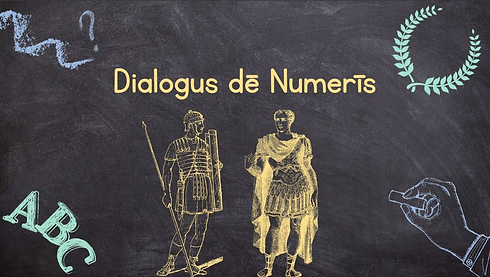
Dialogus de Numeris is a dialogue between a Roman commander and one of his soldiers, Ariovistus, who is of Germanic origin. The conversation covers topics such as cardinal, ordinal, and distributive numbers and adjectives, as well as fractions, offering an almost exhaustive explanation of each. Different systems of numerical notation are also discussed throughout the dialogue.


Dictionaries and Grammars
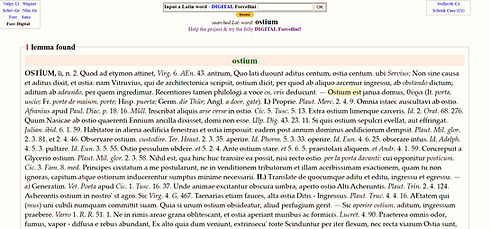
The Lexicon Totius Latinitatis by Egidio Forcellini is one of the most comprehensive Latin dictionaries ever compiled. First published in the 18th century, it meticulously documents the vocabulary, usage, and historical development of Latin from its earliest inscriptions to the Late Antique period. It is a useful tool for those to learn how to talk about Latin words in Latin.


Allen and Greenough Latin Grammar is one of the most respected and comprehensive reference grammars for Classical Latin, widely used by students and scholars across the English-speaking world for over a century. It is renowned for its depth, clarity, and systematic organization, covering the entire range of Latin language mechanics.


Rhetoric was among the most important sciences in both Greece and Rome, especially in those regions and periods where speech was not suppressed by political power. Silva Rhetoricae is an excellent tool for learning the names of rhetorical figures and for recognizing their use and function when reading eloquent authors.

Online libraries


TheLatinLibrary, founded by William L. Carey, is a long-established free online collection of Latin texts spanning from Classical, through Medieval, to Christian and later Latin authors. While it doesn’t provide modern critical editions, translation tools, or editorial notes, it is extremely useful for accessing many texts quickly and directly — especially for reading and reference.
Documenta Catholica Omnia is a comprehensive digital library that gathers and preserves a vast collection of texts related to the history, theology, philosophy, and culture of the Catholic tradition. It includes writings from the Church Fathers, councils, popes, theologians, and scholars from antiquity to modern times.


Augustinus.it gathers and preserves the complete works of St. Augustine, not only in their original Latin, but also in Italian, English, Spanish, French, and German translations. It is a valuable resource for those who wish to use translations as an aid while becoming familiar with St. Augustine’s style.

Donate
Would you like to support my work?
By donating even a tiny amount, you encourage me to continue making content on Latin and Ancient Greek as well as publishing whole audiobooks so that you and many more people can practice your listening skills and enjoy the wisdom of the ancients!
